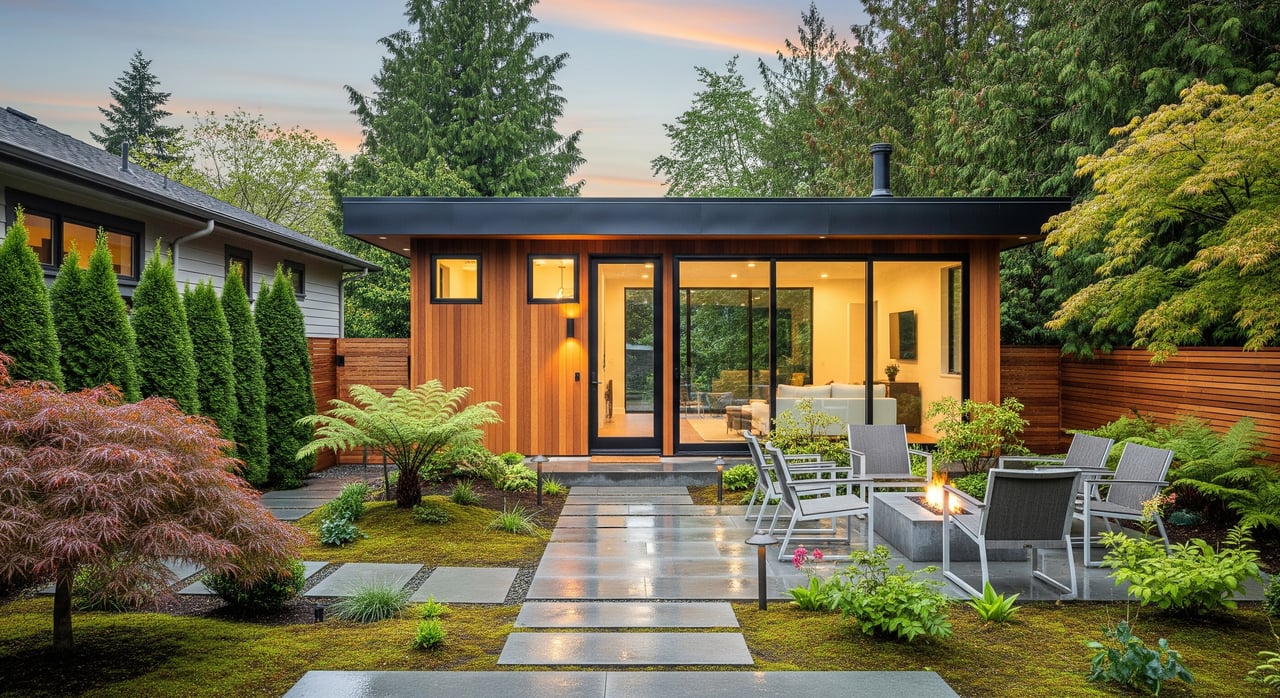
Thinking about adding an accessory dwelling unit to your Bellevue home? You’re not alone. ADUs can create flexibility for multigenerational living, a private workspace, or potential rental income. The rules can feel complex, though, and Bellevue updates them to match regional housing goals. In this guide, you’ll learn what to verify, how permitting works, what to expect for parking and utilities, and how ADUs can affect value. Let’s dive in.
What counts as an ADU in Bellevue
An accessory dwelling unit is a smaller, self-contained home on the same lot as your main house. Bellevue commonly allows two types:
- Internal or attached ADU: Created within or attached to the primary home.
- Detached ADU (DADU): A separate structure on the lot.
Most single-family zones typically allow an ADU, but details vary by zone and can change. Always confirm your property’s zoning and current rules with the city before you design or budget. You can start with the city’s planning pages at the City of Bellevue website. Visit the planning and permitting hub at the Bellevue Planning and Permitting site.
Key rules to verify on the city site
Local codes evolve. Before you hire a designer or contractor, confirm these items on Bellevue’s site or by contacting the planning desk:
- Allowed zones for attached and detached ADUs
- Maximum size for attached and detached ADUs
- Height limits for detached ADUs
- Setbacks and lot coverage limits
- Number of ADUs allowed per lot
- Owner-occupancy requirements
- Off-street parking requirements for ADUs
- Short-term rental rules for ADUs
- Any minimum lot size requirements
Bellevue aligns local code with state policy over time. For broader background on why these rules exist and how they may change, review resources at the Washington State Department of Commerce.
Can your lot support an ADU?
Zoning and lot standards
Start with a zoning lookup and a quick review of your lot’s basic constraints. Zoning will determine where an ADU is allowed and which standards apply. Setbacks, lot coverage limits, and height rules influence where a detached unit can sit and how large it can be. If you are near lot coverage limits already, a new footprint may trigger design changes or reduce the size of a potential detached unit. For a quick orientation, contact the city via the Bellevue Planning and Permitting site.
Utilities, stormwater, and site conditions
- Sewer and water: If you are on city sewer, an ADU typically connects to it. Homes on septic may need system upgrades or may face limits that affect feasibility.
- Stormwater: New detached structures can trigger stormwater controls, such as infiltration or treatment. These items can add time and cost.
- Critical areas and easements: Steep slopes, wetlands, and drainage easements can limit where you build or whether a detached ADU is possible.
- Historic or neighborhood overlays: Some overlays require design review or impose extra standards. Ask the city if your property is subject to any overlays.
Parking, access, and safety
Parking rules
Many jurisdictions reduce or remove off-street parking minimums for ADUs to encourage housing. Requirements vary by location and may allow existing on-site parking to count. Always confirm current standards and any street-parking allowances with the city’s ADU policy. Start with the Bellevue Planning and Permitting site.
Access and curb cuts
Expanding a driveway or adding a new curb cut typically needs a separate transportation approval. Ask the city about driveway width, surfacing, and sight-distance standards before you finalize a site plan.
Building code and safety
ADUs must meet building, electrical, plumbing, mechanical, and energy codes. This includes safe egress, minimum habitable space, and smoke and carbon monoxide detectors. Depending on structure size and separation, sprinklers may not be required for many ADUs, but fire-resistive construction or separation could apply. Confirm all safety requirements with city reviewers at the Bellevue Planning and Permitting site.
Utilities and addresses
Some cities allow shared utility meters, while others prefer or require separate metering. Addressing and unit numbers are assigned through the city or utility provider. Ask about metering, fees, and address assignment during your pre-application steps.
Rental rules and licensing
If you plan to rent the ADU, confirm local rental registration or licensing, and ask about short-term rentals. Some cities regulate short-term rentals separately or limit them in ADUs. For state-level context and best practices, visit the Washington State Department of Commerce.
Permitting steps and timelines in Bellevue
Here is a homeowner-friendly overview of what to expect. Always confirm the latest steps and target timelines with Bellevue’s Development Services Center at the Bellevue Planning and Permitting site.
Pre-application
- Verify zoning, setbacks, lot coverage, and utility availability.
- Consider a pre-submittal conversation with planning staff to discuss codes and submittals.
Design and documentation
- Prepare a site plan showing ADU location, setbacks, utilities, and any parking.
- Provide floor plans, elevations, and structural notes as needed.
- Add civil notes if stormwater or utility work is required.
Permit submittal
- Submit your building permit application and plans through the city’s permitting portal.
- Most code-compliant ADUs proceed through standard building review. Ask if any land use review applies to your site.
Review process
- Plans are reviewed by building, planning, fire, transportation, and utility reviewers as applicable.
- Initial review cycles often take several weeks, depending on completeness and workload.
Corrections and resubmittal
- Address comments quickly. Resubmittals can affect review timelines.
Permit issuance and construction
- After approval, schedule required inspections. Typical inspections include footing/foundation, framing, mechanical/plumbing, and final.
Typical durations
- Feasibility and design: about 2 to 8 weeks
- Plan review: about 4 to 12 or more weeks depending on complexity and workload
- Construction: from several weeks to many months, depending on scope and whether the ADU is internal or detached
Fees
- Expect building and plan review fees, plus potential impact and utility connection fees. Bellevue publishes fee schedules through its permitting portal. Verify current amounts with the city.
Cost, value, and income potential
How ADUs affect value
ADUs can make a property more versatile for multigenerational living or caregiver housing and can provide rental income potential. Those benefits often widen a home’s appeal to buyers. The exact impact on price depends on ADU quality, rental demand, and how well the unit fits the lot and neighborhood context. Review recent Bellevue sales with similar ADUs to gauge the potential uplift.
Rental income basics
Rent levels vary based on size, finish, and location. Review current local rental listings for comparable ADU types to set expectations. Remember that rental income is taxable and may play a role in loan underwriting.
Financing options to consider
Owners often use cash, a HELOC, a cash-out refinance, or a construction loan to fund ADU work. Lender policies differ, especially in how they treat projected rental income. Speak with a mortgage professional early to align budget and timeline with financing.
Taxes, insurance, and operations
Adding an ADU usually increases assessed value, which can change your property tax bill. For assessment practices and timing, consult the King County Assessor. Inform your insurance carrier before you rent an ADU; you may need a rental dwelling endorsement or a landlord policy. Plan for tenant screening, leasing, and ongoing maintenance, and follow applicable landlord-tenant and local rental rules.
ADU Planning Worksheet — Bellevue homeowners
Copy and fill out this worksheet before you contact the city or a contractor.
Property basics
- Address:
- Parcel/Zoning designation (look up on city site):
- Lot size:
- Sewer available? (Y/N)
- Existing driveway/parking spaces:
- Presence of easements/critical areas? (Y/N) — if yes, list:
Project goals
- Primary purpose (multigenerational living / rental income / home office / other):
- Desired ADU type (internal/attached/detached):
- Desired gross floor area (sq ft):
- Bedrooms/Baths desired:
Site feasibility (quick checklist)
- Setbacks allow desired ADU footprint? (Y/N)
- Lot coverage threshold met? (Y/N)
- Utilities (sewer/water/electrical) capacity adequate? (Y/N)
- Stormwater controls required? (Y/N)
Design and code notes to confirm with Bellevue
- Maximum ADU size allowed in your zone:
- Maximum ADU height (if detached):
- Required parking for ADU:
- Owner-occupancy required? (Y/N)
- Short-term rental allowed? (Y/N)
Budget estimate (fill with contractor quotes)
- Estimated hard construction cost: $
- Soft costs (plans, engineering): $
- Permit and impact fees (estimate from city fee schedule): $
- Utility connection fees: $
- Contingency (10–20%): $
- Total estimated project cost: $
Financing plan
- Proposed funding source (cash / HELOC / cash-out refinance / construction loan / other):
- Lender contact / notes:
Timeline
- Desired start date:
- Expected design and permit time:
- Expected construction duration:
Estimated rental income calculation (simple)
- Comparable monthly rent for similar ADU type in neighborhood: $/month
- Annual gross rent = monthly rent × 12
- Estimated vacancy/management/maintenance factor (suggest 30% of gross)
- Net operating income (NOI) estimate = gross rent − (30% expenses)
- Payback and return analysis: compare annual NOI to project cost for preliminary yield
Next steps
- Verify zoning and ADU allowance on Bellevue’s site.
- Schedule a planning call with Bellevue Development Services.
- Gather 2 to 3 contractor and architect quotes.
- Contact a lender for construction financing pre-approval.
- Check King County Assessor policy for reassessment timing and valuation.
How Hearken Real Estate helps
You do not have to navigate this alone. We help you understand how an ADU fits your long-term goals, estimate market impact using local comps, and plan a smart path from design to resale or rental. If you are buying, we can help you spot properties with ADU potential. If you are selling, we can position an existing ADU as a value driver with data and clear messaging.
Ready to talk through your options in Bellevue? Reach out to Hearken Real Estate for a thoughtful, data-informed consultation.
FAQs
Can I build an ADU on my Bellevue lot?
- It depends on zoning, setbacks, lot coverage, utilities, and any overlays; start with a zoning check and confirm ADU allowances on the Bellevue Planning and Permitting site.
Do I need to live on the property if I add an ADU in Bellevue?
- Some cities require owner occupancy and others do not; verify Bellevue’s current owner-occupancy rule on the Bellevue Planning and Permitting site.
Will an ADU increase my King County property taxes?
- Likely yes; permitted additions and new units usually trigger reassessment—confirm timing and methods with the King County Assessor.
Can I rent my Bellevue ADU as a short-term rental?
- Short-term rentals are regulated separately in many places and may be limited in ADUs; review Bellevue’s current rules and any rental licensing on the Bellevue Planning and Permitting site.
How long does ADU permitting take in Bellevue?
- Timelines vary with scope and city workload; many projects see 2 to 8 weeks for design, 4 to 12 or more weeks for plan review, plus construction time—confirm current estimates with Bellevue’s Development Services at bellevuewa.gov.
Do I need off-street parking for an ADU in Bellevue?
- Requirements vary by location and may change; check the current ADU parking policy with the city at the Bellevue Planning and Permitting site.