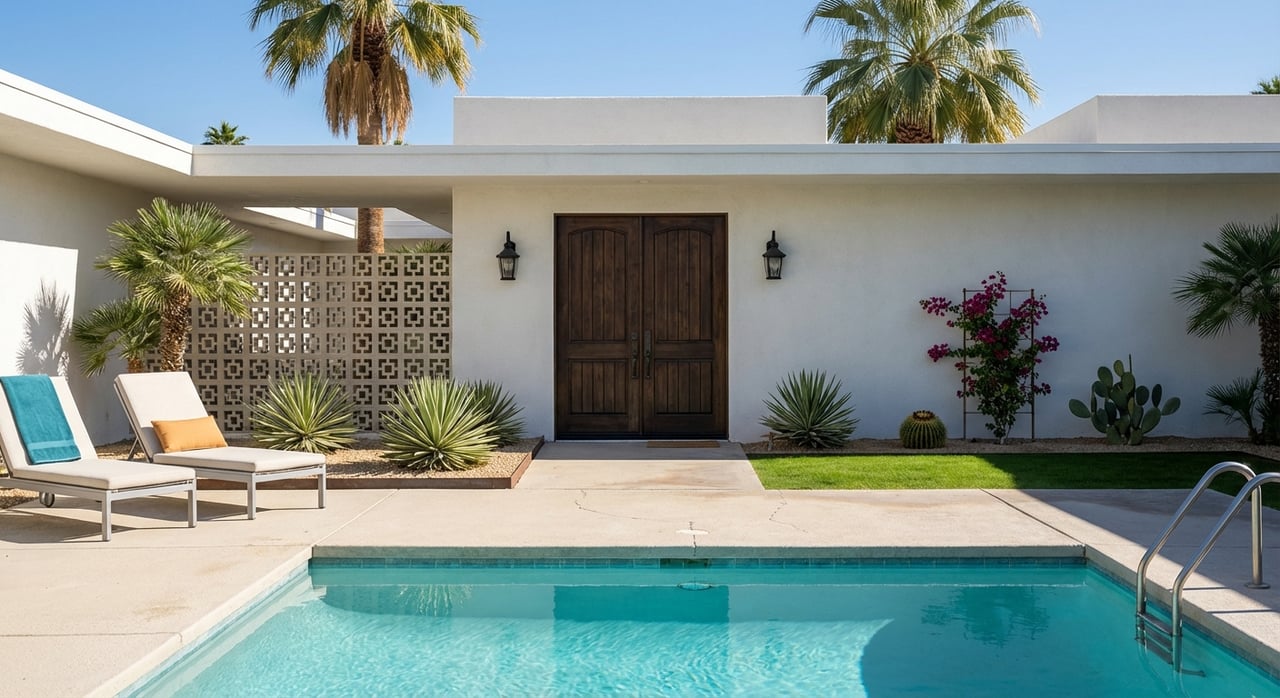
Thinking about a 55+ lifestyle in Palm Desert but not sure where to start? You want low‑maintenance living, resort amenities, and a friendly social scene that fits your pace and budget. In this guide, you’ll learn how 55+ communities work, what it costs to live here, how Palm Desert’s climate and healthcare access play in, and which local communities to tour first. Let’s dive in.
What 55+ means under HOPA
“55+” or “active adult” communities are age‑restricted neighborhoods designed for independent living with amenities that make daily life easier and more social. Under the federal Housing for Older Persons Act (HOPA), a community can legally limit occupancy to older adults if it meets specific rules, including that at least 80% of occupied homes have one resident 55 or older and the community publishes and follows policies that show it intends to be 55+ housing. You can review the federal framework in the Housing for Older Persons Act overview.
These communities are not assisted living. They focus on resort‑style amenities, convenience, and connection, with clubs, classes, and events built into the calendar.
Palm Desert snapshot
- Market context: Portal snapshots put typical Palm Desert home values in the mid‑$500Ks to $600Ks as of early 2026. For example, Zillow reported a Home Value Index near $544,010 through January 31, 2026, while Redfin showed a January 2026 median sale price around $635,000. Different methods explain the gap, but both point to a solid mid‑market range.
- Demographics: Palm Desert skews older than the U.S. average, which helps explain the strong supply of 55+ options. You can explore the city’s age profile in recent ACS data on Census Reporter.
- Climate and seasonality: Winters are mild and sunny, summers are very hot and dry. Many residents are seasonal “snowbirds.” Plan to visit during winter and also in peak summer to see how the community feels year‑round. Local climate normals are summarized on Climate‑Data.org.
- Healthcare access: The valley is served by major hospitals, including Desert Regional Medical Center in Palm Springs, the region’s Level‑1 trauma hospital. Learn more from Desert Care Network.
Top 55+ options nearby
Below are representative active‑adult communities in and around Palm Desert. Fees and inclusions change often, so use these as starting points and confirm current details with the association.
Sun City Palm Desert (Palm Desert)
One of the valley’s largest active‑adult master plans with nearly 5,000 homes on about 1,600 acres. You’ll find multiple clubhouses, pools, two 18‑hole golf courses, arts studios, a theater, and 80‑plus resident clubs. Explore the community and amenities on the Sun City Palm Desert Community Association site. Recurring HOA dues are often lower than private‑club communities, but always confirm what is included at the time you buy.
Sun City Shadow Hills (Indio)
A nearby Del Webb community with multiple clubhouses, indoor and outdoor pools, fitness centers, courts, and golf. MLS data commonly shows HOA dues in the mid‑$300s per month, though that varies by home type and services included. You can review amenities on the Sun City Shadow Hills HOA site.
Trilogy at La Quinta (La Quinta)
A resort‑style enclave known for a large clubhouse complex, pools, fitness, tennis and pickleball, a spa, and an active social calendar. Listings often show HOA ranges in the mid‑$400s to $600s per month depending on what is included, such as front‑yard landscaping and club access. Treat these numbers as time‑sensitive and verify line items before you make offers.
Del Webb Rancho Mirage (Rancho Mirage)
A newer Del Webb option near Rancho Mirage that offers a branded clubhouse, fitness and resort amenities, and a full activity schedule. Recent listings have shown HOA estimates in the mid‑$400s per month in some phases. Confirm current dues and inclusions with the association and your agent.
Costs and budgeting
- Purchase price: Expect a broad range across floor plans, views, and community tiers. As a general Palm Desert backdrop, portal snapshots as of early 2026 place typical values in the mid‑$500Ks to $600Ks. Always compare by community and home type.
- HOA dues: Budgets vary widely, roughly $200 to $600+ per month in the valley depending on location and whether services like front‑yard landscaping, cable, trash, and full clubhouse privileges are included. Sun City communities often show lower recurring dues than private‑club neighborhoods, while some resort brands fall in the higher end of the range. Treat every dollar figure as time‑sensitive and confirm exactly what your HOA fee covers.
- Property taxes: In California, Proposition 13 sets a base 1% rate of assessed value, with most properties paying voter‑approved bonds and assessments on top. Effective totals often land near 1.1% to 1.3% depending on your tax‑rate area. Review the Legislative Analyst’s Office primer on property tax and verify the specific tax‑rate area for any home you consider.
- Other costs: Budget for home insurance and HOA master‑policy components, utilities, and any optional or required club dues. Air‑conditioning use rises sharply in summer, so factor that into monthly costs if you plan to be here year‑round.
Amenities and home styles
- What you’ll see most: resort clubhouses with fitness and studio spaces, multiple pools, tennis and pickleball, bocce, arts and crafts rooms, game rooms, libraries, and busy club calendars. Sun City’s community site shows how extensive these offerings can be, with dozens of resident‑run clubs and events you can browse on the SCPDCA website.
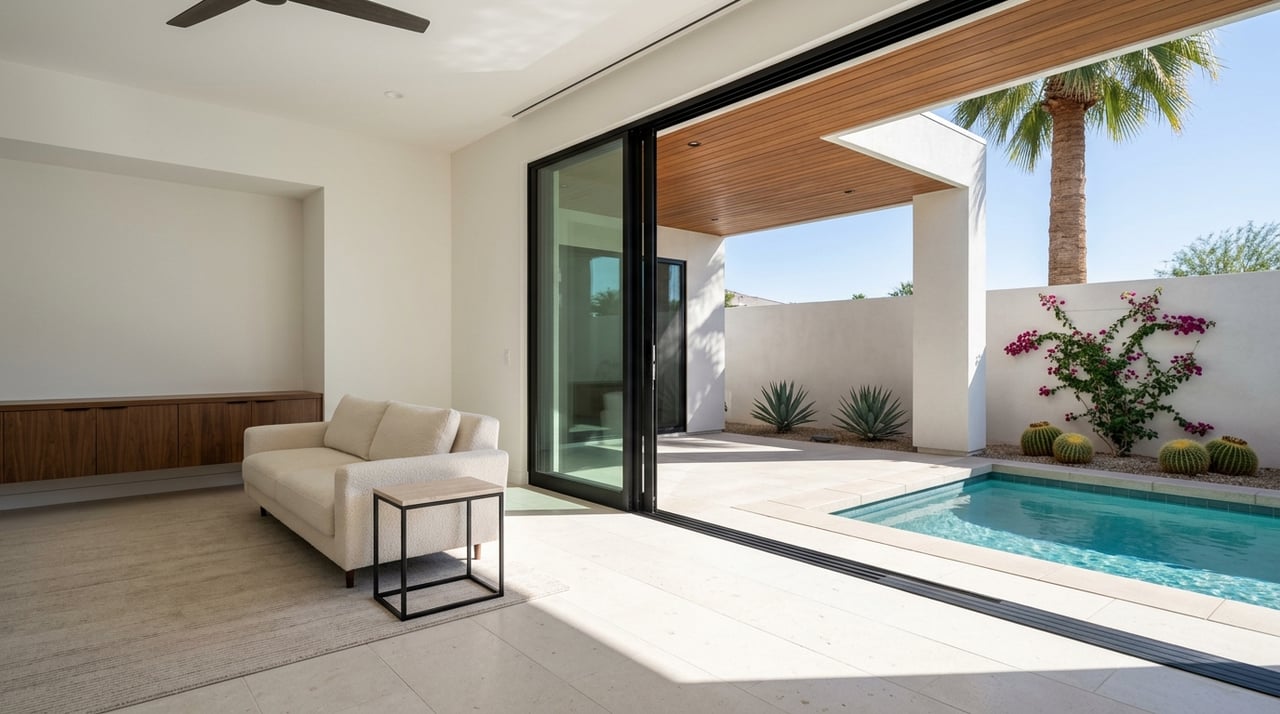
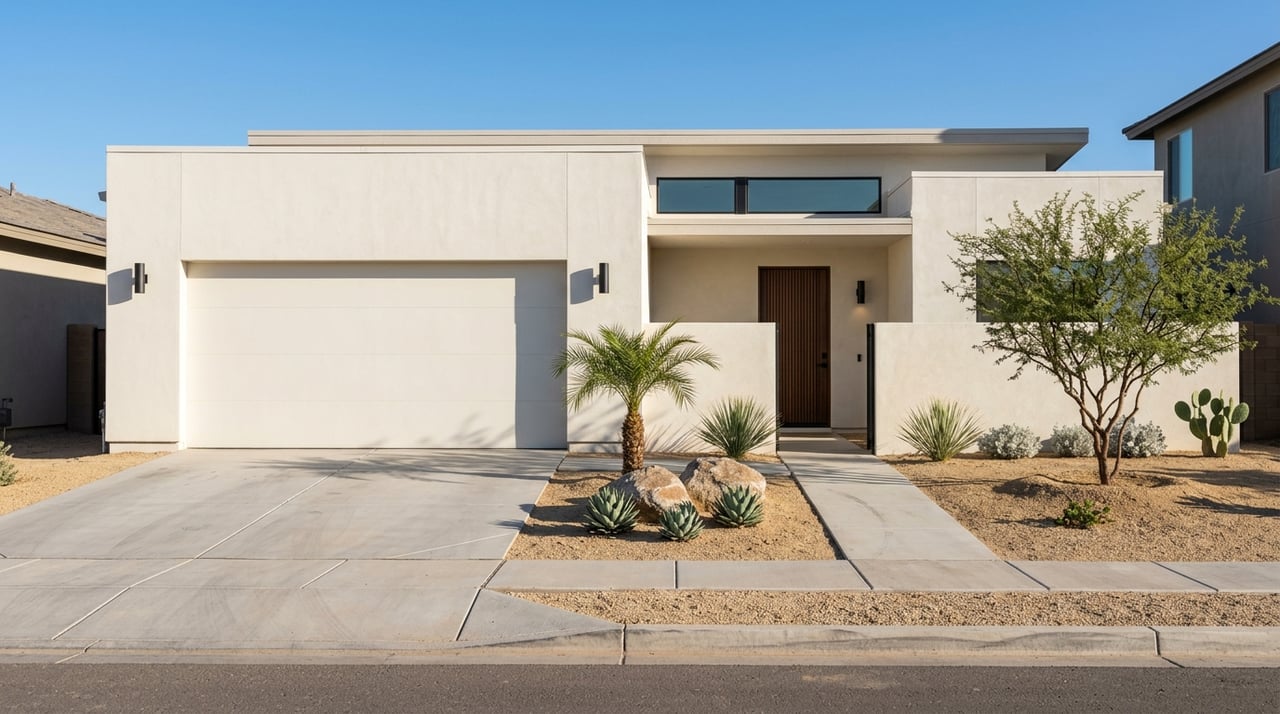
- Common floor plans: single‑story layouts that prioritize one‑level living, often with two bedrooms, two baths, and options for a den or guest casita. Many homes sit on low‑to‑medium maintenance lots, and a subset includes private pools or spas.
- Social life: Weekly classes, hobby meetups, performances, travel groups, and seasonal festivals help you connect quickly if you want an active calendar. Most communities publish monthly schedules and welcome newcomers.
55+ vs other neighborhoods
- Age rules and culture: 55+ communities follow HOPA eligibility and verification policies, which shape a lifestyle centered on older adults. Read the federal context in the HOPA summary.
- Maintenance and services: Many active‑adult HOAs include front‑yard landscaping and amenity upkeep, which can reduce chores but increase monthly dues. In traditional neighborhoods, you usually handle these tasks yourself with little or no HOA.
- Social structure: In 55+ communities, activities, clubs, and staffed amenities create a built‑in social fabric. In non‑age‑restricted areas, socializing is more informal and varies by block or subdivision.
- Governance and restrictions: HOAs can regulate exterior changes, rentals, and short‑term rentals. HOPA addresses age‑restriction legality only. Always read the CC&Rs, Rules and Regulations, and the most recent reserve study before you buy.
Buyer checklist for Palm Desert 55+
Use this quick checklist as you tour and compare communities:
- Confirm HOPA status and age‑verification policies with the association. Review the federal framework here: Housing for Older Persons Act.
- Request the current HOA budget, reserve study, CC&Rs, and house rules. Check what dues include, such as landscaping, cable, trash, and security. See example association resources at the SCPDCA site.
- Clarify club and amenity fees versus HOA dues. Some amenities or dining may have separate charges.
- Ask about rental rules, including short‑term rental policies, if you plan to rent part‑time.
- Verify the property’s tax‑rate area and any special assessments. Read the California property‑tax primer to understand the basics.
- Map healthcare access, including the nearest ER and specialists. Start with Desert Regional Medical Center for regional context.
- Visit in both winter and summer to feel the seasonal difference. Review climate normals at Climate‑Data.org.
- Compare recent resale activity and days on market by community with your agent’s MLS data.
How Hearken helps
Choosing a 55+ community is about lifestyle fit as much as price. You need clear answers on fees, rules, tax implications, and year‑round livability, plus a guide who will listen and calibrate the search to your must‑haves. Our partner‑led approach brings steady, high‑touch support, local insight across Greater Palm Springs, and sharp negotiation and financing know‑how when it is time to write. Ready to tour with a clear plan and no pressure? Connect with Hearken Real Estate to start smart.
FAQs
What is a 55+ community under HOPA?
- Under the federal Housing for Older Persons Act, a 55+ community can limit occupancy to older adults if it meets conditions such as having at least 80% of occupied homes with one resident 55 or older and publishing age‑restriction policies. Review the HOPA summary.
How much are HOA dues in Palm Desert 55+ communities?
- You will commonly see ranges from about $200 to $600+ per month depending on the community and whether services like landscaping, cable, trash, and full clubhouse privileges are included. Always verify inclusions with the HOA. See example amenity scope at SCPDCA and Sun City Shadow Hills.
Are short‑term rentals allowed in 55+ neighborhoods?
- It varies. Many associations restrict rental length or limit the number of rentals. Read the CC&Rs and Rules and Regulations for the specific community and get written confirmation from the HOA before you plan to rent.
What is Palm Desert’s climate like for year‑round living?
- Winters are mild and sunny, while summers are very hot and dry. If you plan to be here year‑round, visit in winter and peak summer, and review local climate normals on Climate‑Data.org.
How close are hospitals to Palm Desert 55+ communities?
- The Coachella Valley has regional hospitals, including Desert Regional Medical Center in Palm Springs, which is the area’s Level‑1 trauma hospital. Learn more from the Desert Care Network.
How are property taxes calculated in California?
- Proposition 13 sets a base 1% rate of assessed value, with most properties also paying voter‑approved bonds and assessments. Effective totals often land near 1.1% to 1.3%. See the state primer on property tax.